How Low Should I Lower My Car? A Practical Guide to Safe and Legal Ride Height
 Oct, 28 2025
Safe Car Lowering Calculator
Recommended Safe Ranges
Hatchbacks 1.3-1.6 inches
Sedans 1.2-1.7 inches
Coupes 1.4-1.8 inches
Performance 1.5-2.0 inches
Enter vehicle details to see your safe lowering range
Lowering your car sounds simple-just swap out the springs and you’re done, right? Wrong. Too low and you scrape your bumper on every speed bump. Too high and you waste the whole point of the upgrade. So how low should you really go? It’s not about looking cool in a magazine photo. It’s about balance: performance, safety, legality, and your wallet.
What Happens When You Lower a Car Too Much?
People think dropping a car 3 inches makes it handle like a race car. But in reality, most street cars lose more than they gain. When you lower a car beyond its suspension’s design limits, you start killing the geometry. The camber goes negative, the tires wear unevenly, and the steering feels twitchy. You might think you’re getting better grip, but you’re actually reducing contact patch during normal driving.
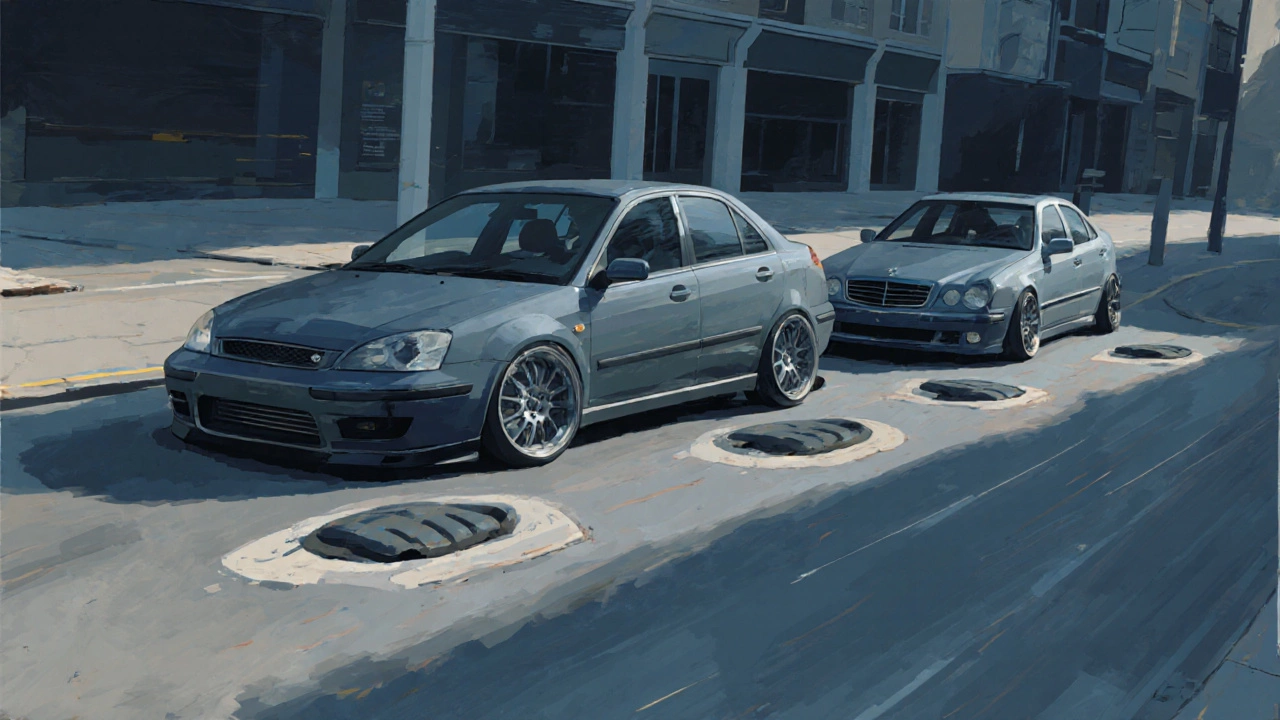
And then there’s the damage. Lowered cars don’t just scrape on speed bumps. They catch on driveways, parking ramps, even deep potholes. One bad hit can bend a control arm, crack a wheel, or snap a strut. Repair costs for those fixes? Easily $800-$1,500. That’s more than the cost of the lowering springs themselves.
Real-world example: A 2020 Honda Civic lowered 2.5 inches with cheap springs scraped its front lip on a standard 6-inch driveway apron in Birmingham. The owner had to replace the entire front bumper cover and repair the underbody shield. He didn’t even notice the damage until his car started making a loud rattling noise.
What’s the Safe Lowering Range for Most Street Cars?
For most sedans, hatchbacks, and coupes, a drop of 1.2 to 1.8 inches is the sweet spot. That’s about 30-45 mm. This gives you a noticeably sportier look without wrecking the suspension geometry or ride quality.
Here’s what works for common models:
- Toyota Corolla, Honda Civic, Volkswagen Golf: 1.3-1.6 inches
- Ford Focus, Hyundai Elantra: 1.2-1.7 inches
- BMW 3 Series, Mercedes C-Class: 1.4-1.8 inches
- Subaru WRX, Mitsubishi Lancer: 1.5-2.0 inches (due to higher ground clearance stock)
These numbers aren’t random. They’re based on factory suspension travel, common UK road conditions, and real-world feedback from tuning shops in Birmingham, Manchester, and Leeds. Most reputable lowering spring brands like Eibach, H&R, and KW design their kits with these ranges in mind.
Why Spring Rate Matters More Than Drop Height
It’s not just how low you go-it’s how stiff the springs are. A spring that’s too stiff for your car’s weight makes the ride harsh and reduces traction. A spring that’s too soft won’t control body roll and can bottom out on rough roads.
Most aftermarket springs are 15-30% stiffer than stock. That’s fine. But some cheap kits are 50%+ stiffer. That’s a problem. You’ll feel every crack in the road, and your shocks won’t last long. In fact, many people replace their shocks within 20,000 miles after installing overly stiff springs. Factory shocks aren’t built for that kind of load.
Pro tip: If you’re dropping your car more than 1.8 inches, you should replace the shocks too. A full coilover setup is better than just springs + old shocks. But if you’re sticking to 1.5 inches or less, good quality springs paired with OEM shocks will last you 50,000+ miles.
Legal Limits and Insurance Risks
In the UK, there’s no specific law saying “your car must be X inches off the ground.” But the MOT test does check for “excessive wear or damage” to the underbody and suspension. If your car scrapes so badly that it damages the exhaust, fuel lines, or brake hoses, you’ll fail the test.
More importantly, your insurance company doesn’t care how low your car is-they care if it’s been modified. Most policies require you to declare any suspension changes. If you don’t, and you get into an accident, your claim could be denied. One driver in Coventry lost a £12,000 claim because his lowered car hit a curb, bent the axle, and the insurer found out he hadn’t declared the springs.
Always check with your insurer before lowering your car. Some companies charge a small fee for modifications. Others won’t cover you at all if you go below a certain height. Don’t assume they’ll know what you’ve done. They won’t.
How to Test Your Ride Height Before Committing
Before you buy springs, test the look and feel. Many tuning shops in the UK offer test-fit services. You can rent a set of lowering springs for a weekend and install them yourself. Drive around your neighborhood, hit a few speed bumps, and see how it feels.
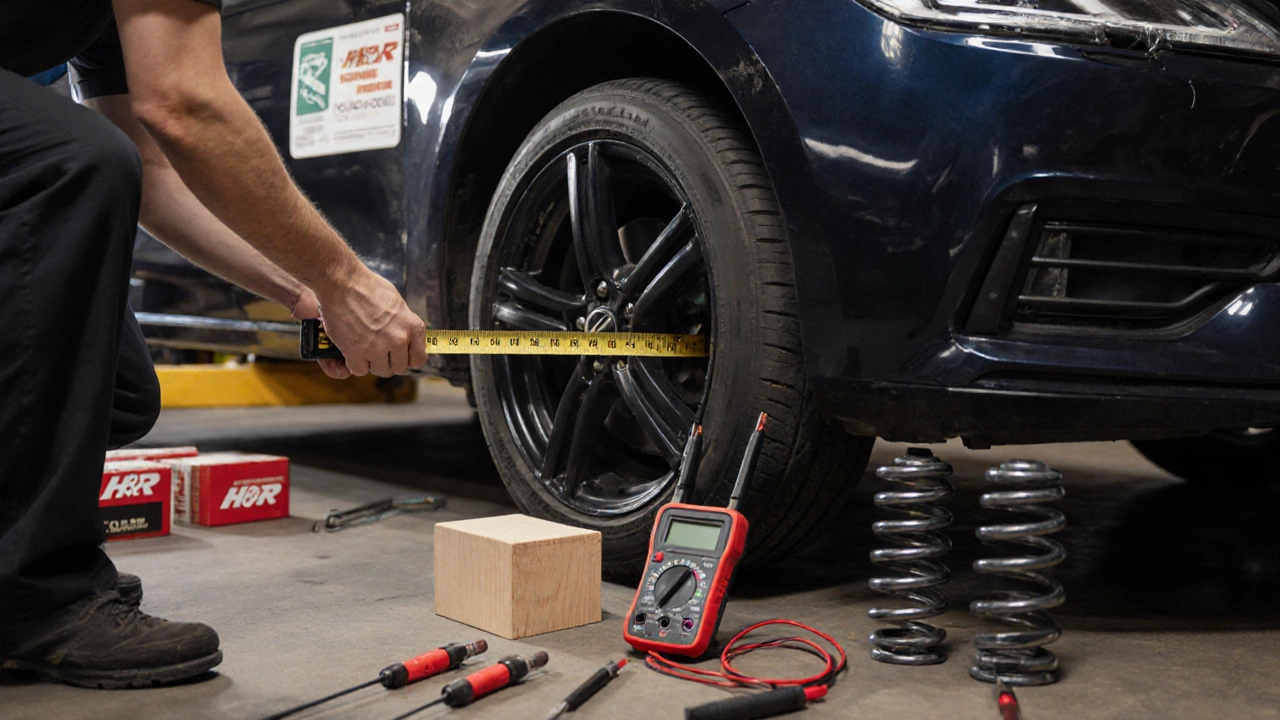
Or try this: Park your car on a flat surface. Measure the distance from the bottom of the wheel arch to the center of the wheel. Write it down. Then, take a 2-inch thick block of wood and place it under the wheel. Now measure again. The difference? That’s roughly how much your car will drop with springs. If the new measurement still leaves 5 inches or more from the arch to the wheel, you’re probably safe. If it’s less than 4.5 inches, you’re flirting with trouble.
What About Coilovers?
Coilovers give you adjustability-you can fine-tune the height and damping. But they’re not a magic fix. Even adjustable coilovers can be set too low. Many people buy them thinking they’ll “just tweak it later,” then forget and leave it at the lowest setting.
If you go the coilover route, start with the height at factory level. Drive for a week. Then lower it by 0.25 inches at a time. Test each setting on different roads. Only go lower if you still feel comfortable over bumps and don’t hear scraping noises.
Also, coilovers are expensive. A decent set costs £800-£1,500. If you’re just after a subtle look, lowering springs at £200-£350 are a smarter choice.
What Not to Do
- Don’t cut your springs. Ever. It’s dangerous and unpredictable. You’ll get uneven drop, uneven ride, and possible failure.
- Don’t ignore alignment. Lowering changes camber and toe. Get a four-wheel alignment after installation. Otherwise, your tires will wear out in 5,000 miles instead of 50,000.
- Don’t assume all lowering kits are the same. Cheap eBay springs often use inferior steel and inconsistent spring rates. Stick to brands with real-world testing: Eibach, H&R, KW, TEIN.
- Don’t lower your car without checking clearance for your tires. Wider wheels + lowered suspension = rubbing. Always check with the manufacturer’s fitment guide.
Final Rule of Thumb
Here’s the simplest way to decide: Lower your car until it looks good, but not so low that you’re afraid to drive it.
If you hesitate before pulling into a gas station because you’re worried about scraping, you’ve gone too far. If you’re still comfortable driving over speed bumps, driveways, and potholes without cringing, you’re in the right zone.
Most people who drop their cars too low regret it within six months. The ones who stick to 1.5 inches? They love it. They get the look, the improved handling, and they still drive their car every day without fear.
It’s not about how low you can go. It’s about how low you can go and still enjoy driving.
Is it illegal to lower my car in the UK?
No, it’s not illegal to lower your car in the UK-but it can cause you to fail your MOT if the modification leads to damage or unsafe components. The DVSA doesn’t set a minimum ride height, but if your car scrapes the road so badly that it damages the exhaust, fuel lines, or suspension parts, you’ll be turned away. Insurance companies also require you to declare suspension changes. Failing to do so could void your policy.
How much does it cost to lower a car with springs?
Quality lowering springs cost between £200 and £350 for a full set. Installation at a garage typically runs £80-£150, depending on location. If you do it yourself, you’ll need spring compressors (which you can rent) and basic tools. Don’t forget the alignment-another £50-£80. Total cost: £300-£500.
Can I use lowering springs with stock shocks?
Yes, but only if you’re dropping your car 1.5 inches or less. Stock shocks are designed for the original ride height and spring rate. Going lower than that puts extra stress on them, leading to premature wear. If you’re dropping more than 1.8 inches, replace the shocks too. For most street drivers, springs + stock shocks are fine for 50,000+ miles.
Will lowering my car improve handling?
Yes, but only if done correctly. Lowering reduces body roll and lowers the center of gravity, which helps cornering. But if you go too low, you lose suspension travel, which hurts traction on uneven roads. The best improvement comes from a 1.2-1.8 inch drop with proper alignment and good-quality springs. Beyond that, you’re trading comfort for diminishing returns.
How do I know if my car is too low?
Listen and look. If you hear scraping noises on speed bumps, driveways, or parking ramps, it’s too low. If your tires rub against the fender when turning, it’s too low. If you feel every bump in the road and the car bounces excessively, your suspension is overwhelmed. A simple test: drive over a standard 6-inch driveway apron. If you hesitate or feel nervous, lower it back up.